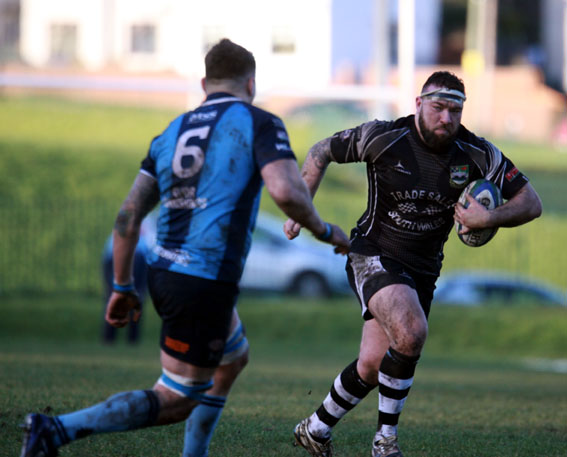
The club gained a reputation for attractive running rugby until the advent of World War One ended rugby in the village, after which, as in other clubs, a period of rebuilding to pre-war standards was necessary. After a period based at the Church Inn, they re-established at the Bridge End Inn in 1920/21 with some distinguished officers, among them Sir Samuel Instone, whose company bought the Bedwas Colliery (operational in 1914) in 1921 and, on winning the prestigious Kings Cup Air Race brought the cup to Bedwas for display in a village shop.
The General Strike of 1926 brought unemployment and hardship to the area with disastrous consequences for the club, many young men emigrating or seeking employment elsewhere but the club with its dedicated following, struggled on, regaining its formidable reputation and in the "glorious thirties" established a five year ground record, 1929 to 1933 with records such as 30/31 played 34, lost 1; 31/32 played 29, lost3; 32/33 played 33, lost 2 and that season only 41 points scored against them and had in Trevor Evans, a centre of brilliance who resisted many offers to turn first class, remaining loyal and captained the club for a decade.
Apart from the big clubs, facilities were usually a room in a pub, zinc baths and bread, cheese and pickles. Compare that with today's facilities and wonder at the dedication of that era! Once again the flames of war disrupted the continuity of the club, but prior to the war ending in 1945, meetings were in hand to re-establish, the White Hart and Church House Inns being used as headquarters until, in 1947 the club obtained Bridge field as it's ground and an ex Ministry of Works long hut as its first clubhouse. All the subsequent hard work of construction, improvements, showers, dressing rooms necessary were undertaken by club members and officially opened by then Welsh Captain, John Gwilliam and after sustained negotiation the first lease on the ground was obtained.
The 1950s saw the club further its already fine reputation, both playing and administration, a reputation still maintained. In 1960/61 the Youth side was formed. Much of the club's success may be attributed to such men as E.B.Williams, a legendary figure of influence over 50 years, Harold Cooper J.P., Chairman for over 33 years. And Alan Reed, Secretary for 18 years and who can forget Cyril Gregory, a club stalwart who was also Chairman of the South Mon Union, Welsh Youth National Representative and Mon R.U. Chairman.